
Christos Tsogias-Razakov
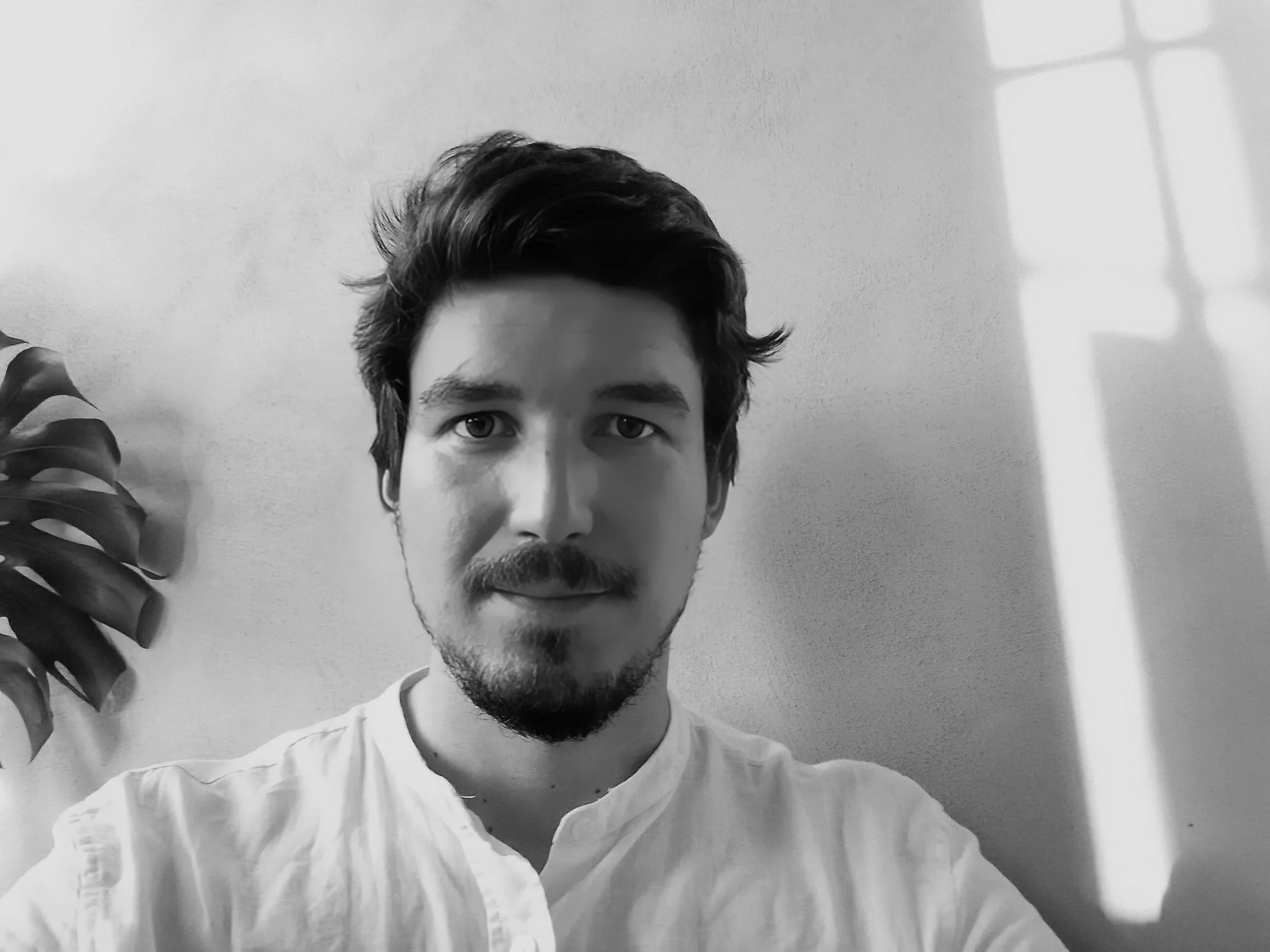
Christos Tsogias-Razakov is an internationally active oboist and researcher. An alumnus of the Royal Conservatoire of The Hague, his career encompasses a broad spectrum of artistic engagements—including solo recitals, chamber and orchestral performances, and studio recordings—all fundamentally informed by his manuscript-driven research.
Beyond the stage, Christos is dedicated to the critical reconstruction of Hellenic musical heritage. Engaging with historical manuscripts, he views the archive as a cultural anthropological site, using the lens of Digital Humanities to migrate neglected works into interoperable semantic architectures. This digital evolution is central to his post-human research, conceptualizing the musical score not as a static historical document, but as a dynamic node of information within a networked system.
This scholarly focus is balanced by his rigorous material inquiry into Arundo donax. By harmonizing the physical resonance of the reed with the expansive potential of digitized historical scores, Christos explores the intersection of human artistry and technological structure. His practice positions the oboist as a hybrid curator, navigating the nexus of historical recovery and future-oriented systems, effectively mapping the intersection of classical heritage and the machine-augmented future.
Christos Tsogias-Razakov’s practice operates at the intersection of performance, Digital Humanities, and material science, investigating the oboe as a site of systemic entanglement. At the core of this inquiry is the "post-human" condition in music—an exploration of how the performer, the instrument, and the digital archive are synthesized into a cohesive performance ecosystem.
His work is driven by a philosophical and aesthetic commitment to the "recovered object." As a cultural anthropologist of music, Christos treats the neglected Hellenic repertoire as more than mere data; he views it as a cultural residue that, when activated, challenges current aesthetic norms. By migrating these historical manuscripts into interoperable semantic web architectures, he transforms them from static artifacts into dynamic, machine-readable data, re-contextualizing Greek identity within a globalized, networked discourse.
Christos maintains a multifaceted international career as a soloist, chamber musician, and orchestral player. His performance practice—spanning global travel, contemporary premieres, and lecture-recitals—is the primary laboratory for his research. He views the concert platform as a site to disseminate archival findings, bridging the gap between theoretical musicology and artistic praxis.
Parallel to his archival work, he conducts rigorous material inquiry into Arundo donax, treating the reed as a primary technological interface—a bridge between performer agency and acoustic potential. By harmonizing the physical resonance of the reed with the fluid architecture of his digitized historical scores, Christos explores the convergence of human artistry and technological structure. Ultimately, his research seeks to redefine the concert artist as a hybrid curator and technician, positioning the instrument as a vital, evolving entity within the 21st-century technological landscape.