
Carolina Rito

Photo courtesy of the artist
Carolina Rito, PhD, is a curator, educator and researcher based in London, whose work has helped establish curatorial research as a distinct field, with a particular focus on public programming as a curatorial practice in its own right. She holds a PhD in Curatorial/Knowledge from Goldsmiths, University of London, and was Professor of Creative Practice Research at Coventry University, where she founded and chaired the Critical Practices research strand. She was previously Head of Public Programmes and Research at Nottingham Contemporary and founding Director of Studies of its independent study programme, CAMPUS. She is currently Senior Researcher at the Centre for Arts and the Political Imagination, HDK-Valand, University of Gothenburg, and Research Fellow at the Institute of Contemporary History, NOVA University Lisbon; in 2024 she was a Fulbright Fellow at the School of Visual Arts, New York. Curatorial projects include Reframing Macaronesia, Institution as Praxis and Critical Pedagogies. Her edited volumes include On the Curatorial (2025), Fabricating Publics (2021) and Institution as Praxis (2020), and she is founding editor of The Contemporary Journal. She supervises doctorates in artistic research, examines internationally, and is part of the Expanded Artistic Research Network (EARN).
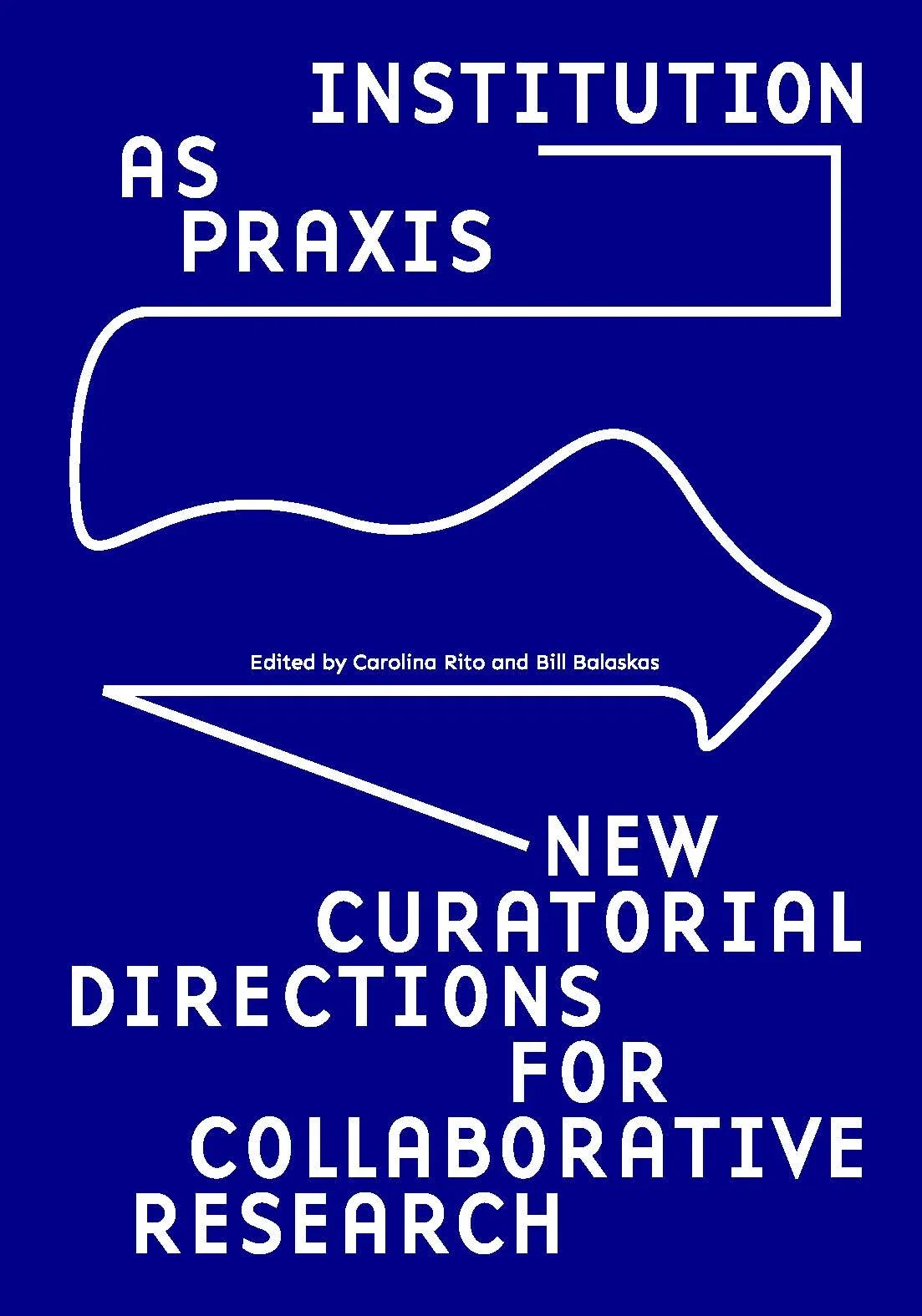
Institution as Praxis: New Curatorial Directions for Collaborative Research
Carolina Rito's research addresses practice as a multiplicity of approaches through which contemporary creative practitioners investigate and intervene in the world. Rather than treating artistic and curatorial work as illustration of knowledge produced elsewhere, she is concerned with the specific epistemic operations practice performs – and with the methodological vocabularies needed to articulate them.
Her work develops in four connected directions. The first concerns creative methods in artistic research, developed through longstanding doctoral artistic research training, international doctoral exchange, and supervision and examining across Europe and Australia. The second treats curating as knowledge production – the argument advanced across On the Curatorial, The Contemporary Journal, Institution as Praxis, and her writing on the curatorial's epistemic capacities, which reads exhibitions, public programmes and publications as research with their own modes of argument, address and evidence.
The third is decolonial practice, pursued through long-term work with the Black Arts Movement's legacies in Britain, with Luta ca caba inda and the African anticolonial archive, and with museums and cultural organisations in Cape Verde, Colombia and the wider Macaronesian region, currently through Reframing Macaronesia. Here her concern is museal justice: the institutional, archival and curatorial conditions under which contested histories can be held, narrated and redistributed.
The fourth is new institutionalism and its afterlives – the question of what institutions are for, how they might be reorganised around research, and what forms of collectivity and public life they can sustain, as tested in Institution as Praxis and in the design of independent study programmes.
www.carolinarito.com; https://pureportal.coventry.ac.uk/en/persons/carolina-rito