
Journals
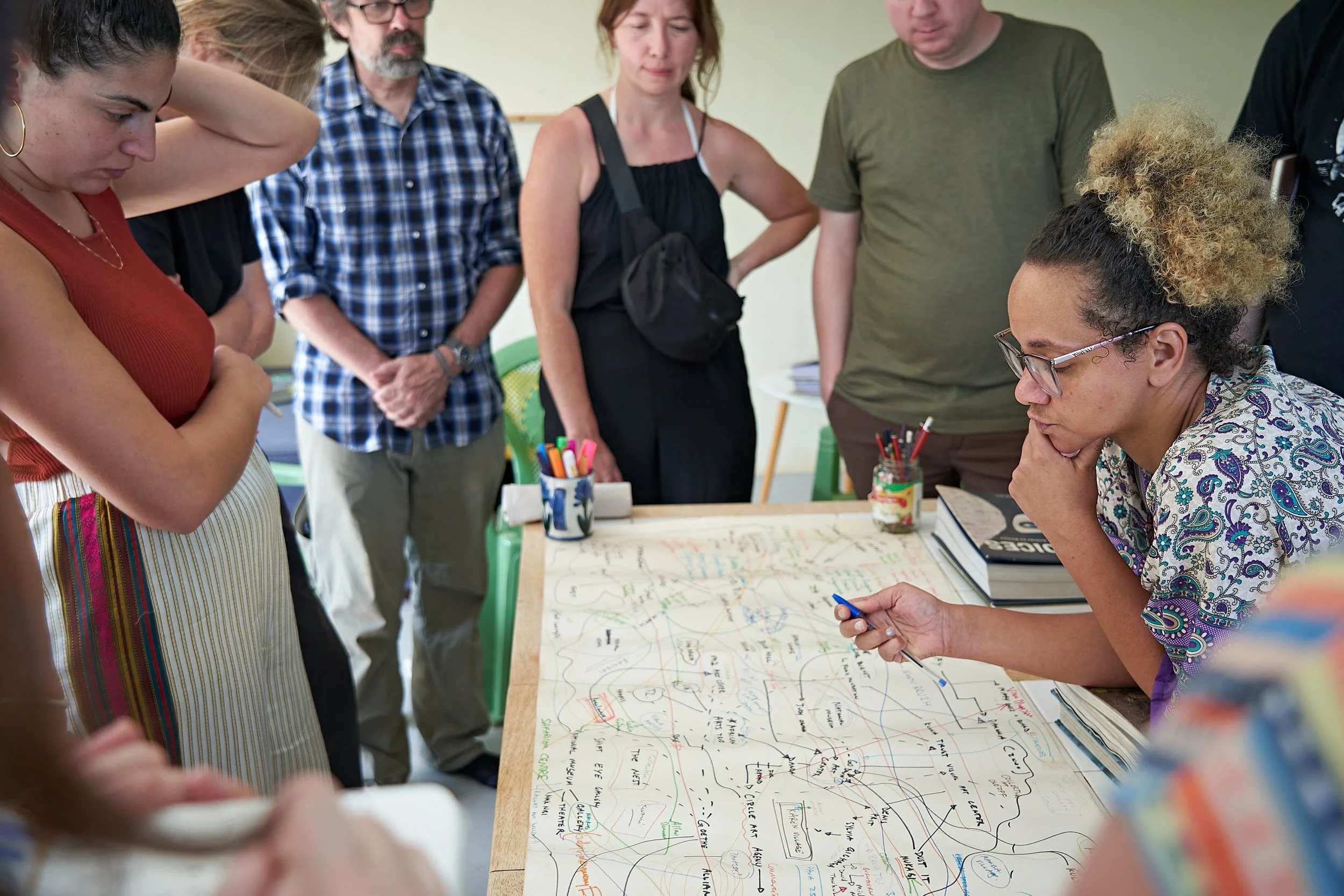
TT central
Commence your journey with a Creative Research Journal. The journal is meant to document your ideas, processes, and the progress of your research, and to respond to feedback in order to reflect, articulate, and digest each interaction. Think of your journal as a research laboratory; the Creative Research Journal may become a crucial element reflected in your final submission.
We encourage you to devise a format that best suits your own research (see below), making it a vital part of your praxis where you experiment with presentation, documentation, and articulation. Log your milestones and document your final research project here.
Your journal can be password-protected but will be available to your peers, advisors, reviewers and other invited session guests, forming an invaluable resource, archive, and means of communication for your research community.
How to Create Your Creative Research Journal
You can add a page to your existing website, if you have one, or create a standalone blog conducive to sharing your research in process.
There are many platforms for online publishing. Some suggestions include:
Straightforward blogging platforms: Wordpress, Squarespace, Wix, or Weebly
obsidian highly customizable note-taking and personal knowledge management (PKM) app designed to help you build an interconnected "second brain" of your thoughts, ideas, and researchplatform for making internet samizdat style sites (free)
are.na: also a platform for creative thinking and collaborative research
Guidelines for Posting to Your Creative Research Journal
➢ Label your journal updates clearly with the month and year of posting.
➢ Remember that it benefits you to provide as clear a picture as possible of your activities that month. This doesn’t have to be finished work: it can be documentation of work in progress, notes, sketches, whatever you feel most appropriately articulates your research.
➢ Remember that evidence of the journal is due on the first Friday of each month we are in session.
➢ Don’t delete or remove assignments or posts: the journal is an archive of your process through the program and will also serve you well in the event of failed experiments and differences of opinions, interpretations, and outcomes.
➢ Only use the password: “TTSF + last two digits of applicable year” (e.g., SFTT25 etc.) if you want to password-protect your blog. Otherwise, faculty and students will be unable to access it.
what to post
Begin by adding your approved application research proposal.
Monthly research dispatches - Document your progress. You can include:
Describe lab/studio/field work and details like size, quantity, duration, etc.
Physical context is helpful: if it’s site specific, why not show the site?
Describe how your process and ideas evolve as your project progress.
What writers, theorists, philosophers, practioners in your field/s of interest informed, resonated with, influenced the work and how?
You are encouraged to use your Creative Research Journal as much as possible to develop a habit of capturing your creative research process. The more you document, the more material you will have readily referable and citable.
Reading Diaries Guidelines
You will be expected to complete a reading diary for all readings indicated as required on the course syllabi. We advise you to commence this journey as early as possible. Most readings will be available on the Intensives programme page a trimester in advance.
Briefly explain your understanding of the text(s), what problems they address, which questions they answer (and how) and which ones are left open. As time is very condensed in intensives and residencies this process will help you clarify your ideas and understanding of the material and lead to better informed discussions. Your diaries give session leaders an advanced sense of what their group will be like. Your questions will alert them to areas of concern, confusion and special interest.
Don’t paraphrase what you read; just confirm your understanding and what questions you have towards the material. This should be possible in 300-600 cumulative words.
Upload your Reading Diary to your Creative Research Journal one week prior to the Intensive Session so your session leaders have time to review them. Make sure to link your diary in your monthly Check-In form, so that we know to share a link to your Journal with course leaders.
sharing your creative research journal
Please share your Journal with your advisory team on a regular basis so they can follow your research progress. The Journal is also intended to help you connect your research to give and receive peer-to-peer feedback.
To access and refer to your peers’ journals, please reference the directory: